



Mānuka's Superpowers
|
New to Manuka Honey in Your 40s? Make These Buying Decisions First
Your first Manuka honey jar doesn’t need to be a guessing game. Find the right MGO strength, taste, everyday uses, and value without paying for more than you need.
Last updated:

Table of Contents
Author
-

Krista Bugden
Shopping for your first jar of Manuka honey can feel oddly complicated. Every jar has numbers, prices range from reasonable to eyebrow-raising, and no one tells you where a beginner should start.
First and foremost, you don’t need the highest MGO or the most expensive jar on the shelf. A good first purchase comes down to a handful of decisions, namely which strength makes sense, how the honey fits the way you eat, where you’ll actually use it, and what to check on the jar before paying. Below, we take a closer look at each one.
1. Start With the MGO Level You Actually Understand
If you’re completely new to Manuka honey, MGO 600+ gives you an easy way in without leaping straight to the top of the range.
The MGO number on the jar indicates the methylglyoxal strength. It shows how many milligrams of methylglyoxal are in each kilogram of honey; for instance, MGO 850+ contains at least 850 mg/kg. Yet, again, there’s no need to start with the strongest one. Your preferences should ultimately guide you!
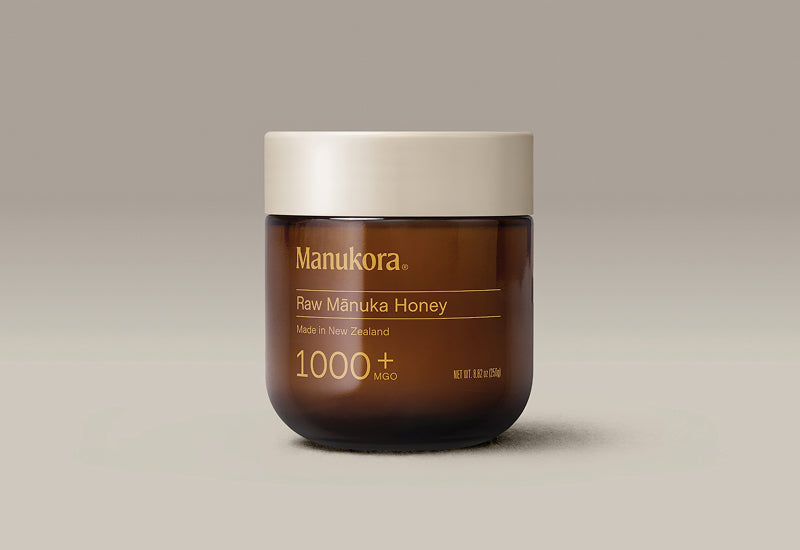
With that said, MGO 600+ often works well as an everyday starting point. MGO 850+ is higher strength, and MGO 1000+ is the highest in our standard Manuka honey collection.
It’s also worth keeping in mind that there’s no ladder you have to climb through with these MGO grades, and starting in your 40s doesn’t mean you need something stronger. Pick the grade based on how much strength you want and what sits comfortably in your budget.
2. Are You Comfortable Adding Honey to Your Daily Sugar Intake?
Manuka honey has a premium story behind it, yet nutritionally it’s still honey. That means it contains naturally occurring sugars and calories.
While the MGO number may be what catches your eye, the Nutrition Facts panel still matters. Check it before buying so you know what a serving actually adds to your total daily caloric and sugar intake.
Next, think about what’s already sweet in your day. If your coffee, yogurt, cereal, or afternoon snacks are already sweetened, consider where your honey may replace one of these, instead of stacking more sweetness on top.
Keep in mind, too, that the MGO strength tells you nothing about how much sugar is in the jar. A higher number doesn’t mean less of it.
3. Decide How You’ll Actually Use It
A first jar makes a lot more sense when you already know where it’s going to live in your day. Otherwise, it’s easy for it to end up at the back of the pantry or cupboard.
The simplest option is a heaping teaspoon straight from a wooden or stainless steel spoon, no preparation needed. If coffee is already part of your morning, adding Manuka honey there is much easier than building a brand-new wellness ritual. Just let the coffee or tea come off boiling and cool for 30 to 60 seconds before stirring in your honey. Cooled lemon water works well too.
If breakfast is where honey usually shows up for you, lean into that. Spoon some over plain yogurt, or use it anywhere you’d normally reach for honey as a sweetener in food or drinks. It doesn’t have to be a daily fixture, either. Some people simply enjoy a spoonful now and then when they feel like it.
If you do make it part of your routine, we recommend one to three heaping teaspoons each day as a suggested serving. Whether it’s a quick spoonful before work or an occasional drizzle on the weekend, the right use is the one that works within your lifestyle and routine.
4. Look Beyond the MGO Number Before You Pay
Once the MGO grade looks right for your needs, it’s also worth checking what else a brand tells you about its honey. This is usually where you find out why two jars with similar numbers can cost very different amounts.
Here’s a quick checklist to run through before ordering:
-
MGO strength
-
Jar weight
-
Testing information
-
Where the honey comes from
-
Whether the jar can be traced to a batch or beekeeper
-
Best-before date
-
Ingredient list
-
Sourcing and company standards
With Manukora, a lot of that is right there on the jar. Each jar contains a QR code that lets you trace the honey back to its source and even learn about the beekeeper who harvested your batch. Our honey is free from glyphosate, antibiotics, and GMOs, and Manukora is a Certified B Corp.
We also practice The Art of Ethical Beekeeping. This means we care just as much about our bees and the environment as we do about the honey we produce.
The Bottom Line
Buying Manuka honey for the first time in your 40s doesn’t need to be complicated. Pick an MGO strength you understand, and have a rough idea of how you’ll use it. Make sure the flavor sounds like something you’ll genuinely enjoy, and consider how it fits your current eating habits. Then check what you can verify about the jar before you pay.
Compare our MGO 600+, MGO 850+, and MGO 1000+ options, and choose the one that feels easiest to start with and keep using!
FAQs
What MGO grade should I start with in my 40s?
If you’re completely new to Manuka honey, MGO 600+ offers a simple starting point. MGO 850+ or 1000+ make more sense once you know you’d like a higher strength or bolder flavor.
Is MGO 1000+ better because I’m over 40?
No, age alone doesn’t decide your MGO grade. Your preferred strength, routine, and budget should guide your choice.
How much Manuka honey should I take daily?
At Manukora, we recommend one to three heaping teaspoons each day, enjoyed straight from the spoon or added to a cooled drink.
Can I add Manuka honey to my morning coffee?
Yes, just ensure you allow time for the beverage to come off boiling, allowing it to cool for 30 to 60 seconds before stirring in your honey.
Is Manuka honey a supplement?
No, it’s a food that can fit into your daily routine, not a replacement for supplements, meals, or medications.
What should I check before ordering my first jar?
Look at the MGO grade, ingredients, jar size, best-before date, source, testing information, traceability, and price.
Table of Contents
Author
-
Krista Bugden