



Mānuka's Superpowers
|
Should Your MGO Grade Change Between Summer and Winter?
If you're wondering if different seasons call for different honeys, this article answers this question and more, helping you determine what's best and when.
Last updated:

Table of Contents
Author
-

Krista Bugden
Your MGO Grade Does Not Have to Follow the Weather
Summer and winter do not give way to different MGO requirements.
While the seasons change plenty of things about day-to-day life, including what you wear or perhaps even what you put in your mug, there’s no specific reason you would need to change your Manuka honey’s MGO level. The only reason is if you prefer to do so!
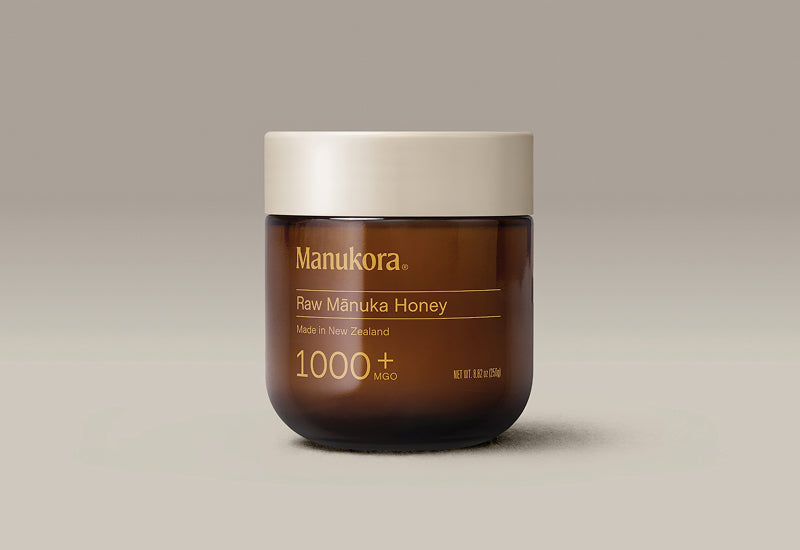
Simply put, MGO 600+, 850+, and 1000+ are different strength options. MGO stands for methylglyoxal, the natural compound Manuka honey is known for, and the number tells you its MGO concentration. It doesn’t change based on the season. If you’re happy with the grade you already use, you can keep using it all year round.
What May Change in Summer Is How You Use and Store It
Inevitably, a steaming cup of tea is less tempting when it’s 30 degrees outside, so plenty of people lean toward cooled drinks instead. A spoonful of Manuka honey stirred into cooled lemon water, or another cooled drink you like, is an easy summer swap.
Either way, you can always enjoy this liquid gold straight from the spoon. Grab a heaping teaspoon first thing in the morning, then add one to two more if you’d like throughout your day. It’s simple and easy to enjoy, no matter the time of year.
However, storing your honey in the summer may necessitate more care. When honey is stored in prolonged heat or direct sunlight, its flavor and compounds may change. To keep your honey fresh, make sure to store it in a cupboard, or anywhere else cool and dry.
Winter May Change the Routine, Not the Strength
When the temperature drops, the drinks you usually enjoy your honey in may also change. Instead of a cold iced tea, you’re more likely to reach for a warm tea, coffee, or hot chocolate.
At Manukora, we recommend letting any hot beverage come off boiling and cool for 30 to 60 seconds before stirring in your honey. You also always have the option to enjoy this delicious creamy liquid gold straight from a wooden or stainless steel spoon!
You might also notice your honey looks a little different in colder months. It can become firmer, and it may crystallize, taking on a thicker, grainier texture. This is a completely natural process, and it’s especially common when honey sits somewhere cool. Rest assured that your honey is basically the same, and the MGO grade likely hasn’t changed based on this texture shift alone.
When Does Changing MGO Grade Actually Make Sense?
Switching grades is always an option, but the weather shouldn’t dictate this. Instead, any change in your MGO level should arise due to personal preferences, your routine, or your budget.
If you'd specifically like a higher MGO strength, moving up to MGO 850+ or MGO 1000+ makes sense. If MGO 600+ keeps fitting neatly into your everyday routine, there’s every reason to stay put.
Basically, there’s no required schedule for moving up or down, and nothing stops you from going back to a grade you used before. Here’s a quick way to think about it:
|
Situation |
What Makes Sense |
|
Your current grade still suits you |
Keep using it |
|
You specifically want higher MGO strength |
Consider 850+ or 1000+ |
|
You want a simpler everyday option |
Consider 600+ |
|
Your budget changes |
Choose the grade that fits comfortably |
|
Only the season changed |
No grade change needed |
At the end of the day, the seasons will keep turning, and your mugs, your wardrobe, and maybe even your cupboard space will change along with them. Yet, your Manuka honey routine can stay pleasantly consistent through it all. Let your preferred MGO strength guide the choice, and let the weather simply decide whether your spoonful goes into lemon water or a cooled cup of tea.
Still unsure? Take our MGO quiz to uncover what the right strength might be for you.
FAQs
Should I use a higher MGO grade in winter?
No, you don’t necessarily need to use a higher MGO grade just because it’s winter. Choose MGO strength based on your preference and routine, not the season.
Should I switch to a lower MGO grade in summer?
There’s no seasonal need to lower your grade. If your current strength still suits you, you can keep using it right through the warmer months.
Does hot weather reduce the MGO grade?
Normal seasonal weather doesn’t automatically change the grade. Prolonged heat isn’t ideal for honey storage, though, so keep the jar somewhere cool and dry, away from direct sunlight.
Does crystallization in winter mean the MGO has dropped?
No, crystallization is a natural texture change, and on its own it doesn’t show that the MGO strength has declined.
Can I add Manuka honey to hot tea in winter?
Yes, but make sure to allow the beverage to come off boiling and give the tea about 30 to 60 seconds to cool before stirring in your honey.
Can I use the same MGO grade all year?
Yes, if one grade fits your preferred strength, routine, and budget, there’s no need to change it with the seasons.
Which MGO grade is easiest for everyday use?
MGO 600+ is an accessible everyday option. MGO 850+ and 1000+ are there when you intentionally prefer a higher MGO strength.
Table of Contents
Author
-
Krista Bugden